Cute Cat Coloring Pages for Kids: Ideas, Print Tips & Creative Activities
Updated September 8, 2026 · for parents & teachers · ages 2–10
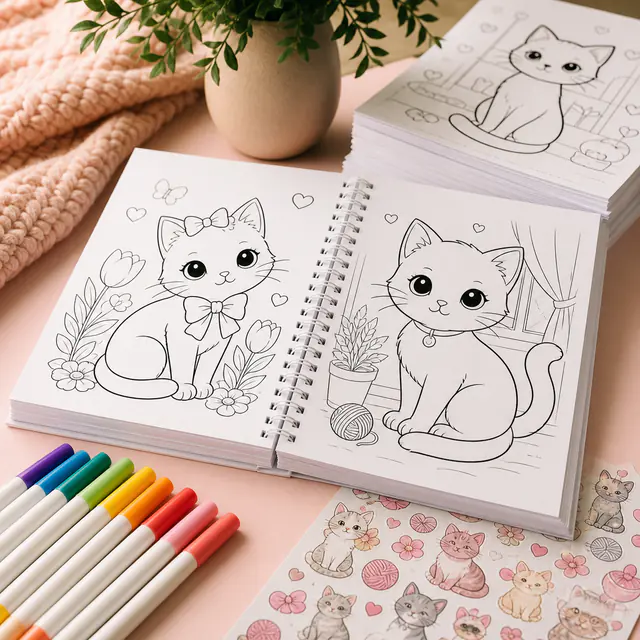
Cute cat coloring pages are a quiet-time favorite for a good reason: round faces, simple whiskers, expressive eyes, and big open shapes give young artists an inviting place to begin. A child can finish an easy face in ten minutes or spend an afternoon building a colorful garden around a curious kitten. This guide helps parents and teachers choose the right page, print it clearly, plan creative activities, and use original Coloring Pagees “Mochi Cat” artwork as inspiration.
The goal is not perfect coloring. It is a relaxed activity that encourages choice, hand control, storytelling, and confidence. Whether you need one calm page before dinner, a rainy-day folder, or enoughprintable cat coloring pages for a classroom table, the practical ideas below will help every sheet feel more useful.
Why cats make great coloring subjects
Cats are easy to recognize even in a few lines: two ears, a round head, and a soft body. That makes them ideal for preschool and early elementary artists. You can keep a page almost empty for toddlers, or add gardens, tea cups, and heart balloons for older kids who want more detail.
Soft pastels, bows, and cheerful poses all work beautifully on a cat sheet. The friendly mood is easy to recreate with your own original cat designs and color choices.
Drawing tips for kids (and helpers)
- Start with a big oval head, then add triangle or rounded ears.
- Keep eyes simple (dots or ovals) so coloring stays calm, not fussy.
- Leave wide “color zones” on the body — fewer tiny gaps means less frustration.
- Add one prop only (a flower, a cup, a ball) if the child is under five.
Coloring ideas & palettes
Classic looks use cream fur with a coral ribbon. Encourage kids to invent wilder versions: mint green cats, rainbow whiskers, starry night backgrounds, or striped “sweater” patterns on the body. Pastel pinks and sky blues feel cozy; neon markers make party pages pop.
For classrooms, turn coloring into a mini lesson: warm vs cool colors, patterns (stripes/spots), or storytelling — “Where is this cat going today?”
How to choose cat coloring pages for every age
Age labels are useful, but the amount of detail on the page matters more. For ages two to four, choose one large cat face or a sitting kitten with a thick outside line. Wide ears, cheeks, and clothing give chunky crayons room to move. A crowded background can make a toddler stop before they begin, so save gardens and party scenes for later. It is completely normal for color to travel beyond the outline; the movement itself is useful practice.
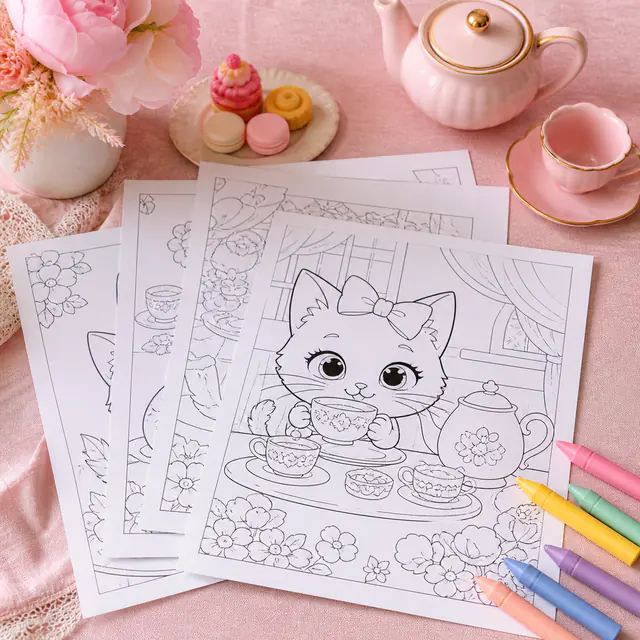
Children from five to seven often enjoy a clear character plus two or three story details. A cat holding a balloon, drinking tea, watering flowers, or opening a birthday gift provides enough variety without becoming overwhelming. At this stage, easy cat coloring pages can include simple patterns on bows, clothes, cups, and flowerpots. Invite the child to add a name or one sentence beneath the finished picture.
Ages eight to ten may want finer fur, patterned clothing, busy gardens, or several cats in one scene. They can experiment with shading and color families instead of filling every area with one flat color. A detailed page also works well as a shared activity: one person colors the characters while another completes the background. Let interest guide the final choice. A confident four-year-old may love a medium page, while an older child seeking a quick break may prefer a simple face.
Printing cute cat coloring pages clearly at home
Good printing begins with the original high-resolution file, not a screenshot or a tiny search preview. Open the downloaded PNG files and match the print dialog to the paper in your tray. Select US Letter for 8.5-by-11-inch paper or A4 for the standard used in many other countries. Portrait orientation is correct for most cat sheets. Choose “fit to printable area” when the design sits close to the edge, then inspect the preview to make sure no ears, tails, or flowers are cut off.
Black-and-white or grayscale mode is enough for line art. Normal quality usually produces cleaner lines than draft mode without using the extra ink required by a photo setting. Print one test page before sending an entire collection to the printer. If the line looks pale, increase quality one step. If the image is unexpectedly small, check that “multiple pages per sheet” is disabled.
Everyday copy paper works well with crayons. Colored pencils feel smoother on 24–28 lb bright-white paper, while washable markers benefit from 32 lb paper or light printer-safe cardstock. Place a spare sheet beneath marker work to protect the table. For more details about paper sizes and ink-saving settings, use ourcomplete printable coloring guide.
Crayons, pencils, or markers: which tool works best?
Crayons are forgiving, inexpensive, and easy for small hands to grip. Use the side of a crayon for broad areas such as backgrounds, then the tip for eyes, bows, and whisker spaces. Colored pencils give older children more control. They can layer a pale base, add a darker shade near the edge, and leave a small white highlight on the fur. Short, light strokes create a soft texture without hiding the printed lines.
Markers produce bright, satisfying color, especially on party pages and large simple faces. Test them on the corner first because some inks spread through thin paper. Gel pens are best saved for small accents—stars, collars, buttons, and flower centers—rather than large areas. A limited tray of six to ten colors often encourages more deliberate choices than a box of fifty.
Seven creative activities beyond ordinary coloring
- Create a cat story. Ask where the kitten is going, what it can hear, and who it hopes to meet. Write the child’s answer beneath the page or staple several pictures into a tiny book.
- Design a pattern challenge. Fill the bow with dots, the shirt with stripes, and the background with repeating stars. This quietly practices observation and sequencing.
- Make a greeting card. Print at half size, color the cat, and fold cardstock around it for a birthday, thank-you, or friendship card.
- Explore emotions. Talk about the cat’s expression and draw a new mouth or eyebrows. Children can choose colors that match excited, sleepy, calm, or surprised moods.
- Build a classroom gallery. Give everyone the same outline and celebrate how different the finished pictures become. Display them without ranking or comparing skill.
- Practice color families. Complete one cat with warm reds and yellows, then another with cool blues and greens. Place the results side by side and discuss how each palette feels.
- Add the missing scene. Extend the path, garden, bedroom, or party beyond the printed border. This turns a ready-made page into an original drawing.
Using printable cat coloring pages for calm and learning
A coloring page can create a useful transition between busy parts of the day. Keep a small folder near the kitchen table for the minutes before dinner, or offer one page after homework as a screen-free reset. Avoid presenting coloring as a test. A calm ten-minute session is successful even if the page remains unfinished. Children are more likely to return when adults notice their choices—“You used three shades of blue”—instead of judging whether the result looks realistic.
Teachers can connect cat coloring pages for kids to simple lessons. Count whiskers and paws, identify shapes in the scene, label body parts, or describe the picture with adjectives. A tea-party page can introduce table vocabulary; a garden cat can support flower and weather words. Pairing art with conversation helps language practice feel natural, especially for young learners and multilingual classrooms.
Common mistakes that make a page less enjoyable
The first mistake is choosing detail for its impressive appearance rather than for the child using it. Tiny spaces can be satisfying for an experienced colorer and frustrating for a beginner. The second is printing from a low-resolution screenshot, which creates gray, broken lines. The third is offering too many pages at once. Two or three options provide choice without turning quiet time into a long search.
Also avoid correcting imaginative colors. Real cats may not have green fur or purple whiskers, but fantasy is part of the value. Protect the table, explain any tool rules, and let the child own the creative decisions. If a page goes wrong, print another permitted personal-use copy rather than treating the mistake as wasted effort.
Meet Coloring Pagees’s original Mochi Cat
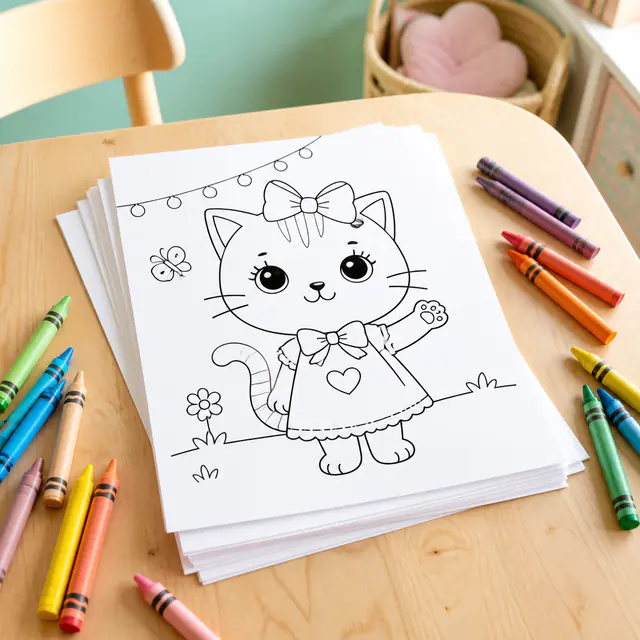
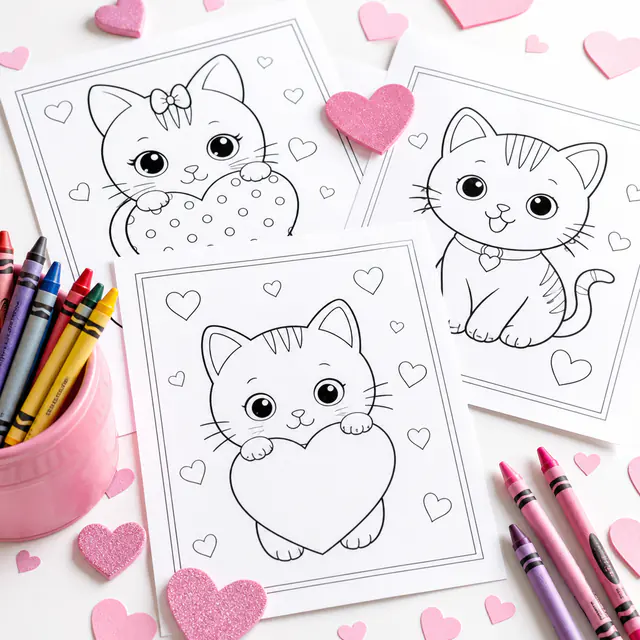
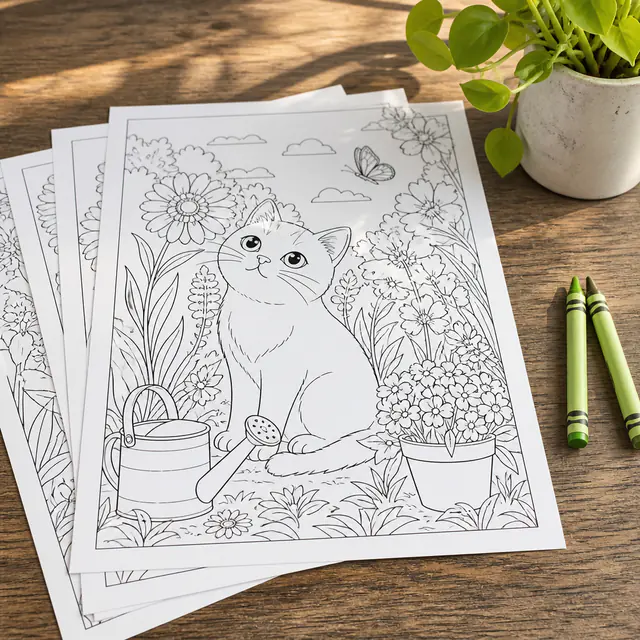
Coloring Pagees’s Mochi Cat is an original round, friendly character with expressive eyes and playful outfits. Our printable products use original scenes created for families and classrooms. The realistic photos below show how clean black outlines look on paper and how simple props—crayons, flowers, hearts, or a cozy desk—can make an ordinary coloring session feel special.
Frequently asked questions
What age are cute cat coloring pages best for?
Large cat faces with thick outlines suit ages two to four. Children five to seven usually enjoy simple scenes, while detailed patterns and backgrounds work well for ages eight to ten. Choose by confidence and interest, not age alone.
What paper should I use for printable cat coloring pages?
Standard copy paper is suitable for crayons. Use 24–28 lb paper for colored pencils and 32 lb paper or light cardstock for markers, cards, and artwork intended for display.
How do I prevent the printer from cutting off the edges?
Match the paper size, choose portrait orientation, select “fit to printable area,” and inspect the preview before printing. Always test one sheet before printing a complete bundle.
More to explore
Browse the coloring pages hub for more themes, or visit the shop for original Coloring Pagees printable packs. Start with theCute Cat Starter Pack for simple pages or explore theCute Cat Mega Bundle for a wider mix of scenes and difficulty levels. In October, cats share the craft table with pumpkins and ghosts — see ourhalloween coloring pages guide and the friendliercute halloween coloring pages printable article.