Printing guide
Coloring Pages Printable: A Practical Guide for Better Prints and Happier Coloring
Looking for coloring pages printable at home should feel simple: choose a design, press print, and set out the crayons. In practice, the right file, paper, and printer settings can make the difference between a crisp page children enjoy and a faint, cropped sheet that goes straight into the recycling bin. This guide shares the practical choices we use when preparing printable art for families, teachers, and creative quiet time.
Updated September 7, 2026 · 10-minute read
Why printable coloring pages still work so well
A printable page is one of the few activities that can begin in less than a minute and still hold a child’s attention without a screen. There is no complicated setup, no long list of supplies, and no single “correct” result. A dinosaur can be purple, a cat can wear rainbow stripes, and a flower garden can become a nighttime scene. That freedom turns a simple outline into a small storytelling exercise.
Printing at home also gives adults useful control. A parent can offer one easy page before dinner instead of handing over an entire book. A teacher can print the same theme for a class while choosing simpler sheets for preschoolers and more detailed designs for older pupils. If a favorite page gets torn or a sibling wants the same picture, a licensed digital set can be printed again for permitted personal or classroom use.
Start with the child, not the trend
The best page is not always the most elaborate one. Match the amount of detail to the person holding the crayon. Toddlers usually do better with one large subject, thick outlines, and generous empty spaces. Children around five to seven often enjoy recognizable scenes with several objects, such as animals in a garden or friends at a tea party. Older children, teens, and adults may prefer repeating mandala shapes, fine floral patterns, or a full scene that rewards slower work.
Interest matters just as much as age. A child who loves sea animals may stay with a detailed dolphin page longer than an “age-appropriate” car they do not care about. Offer two or three choices rather than a huge pile. A small choice feels inviting; too many options can turn a calm activity into another decision.
Choose a file that will print cleanly
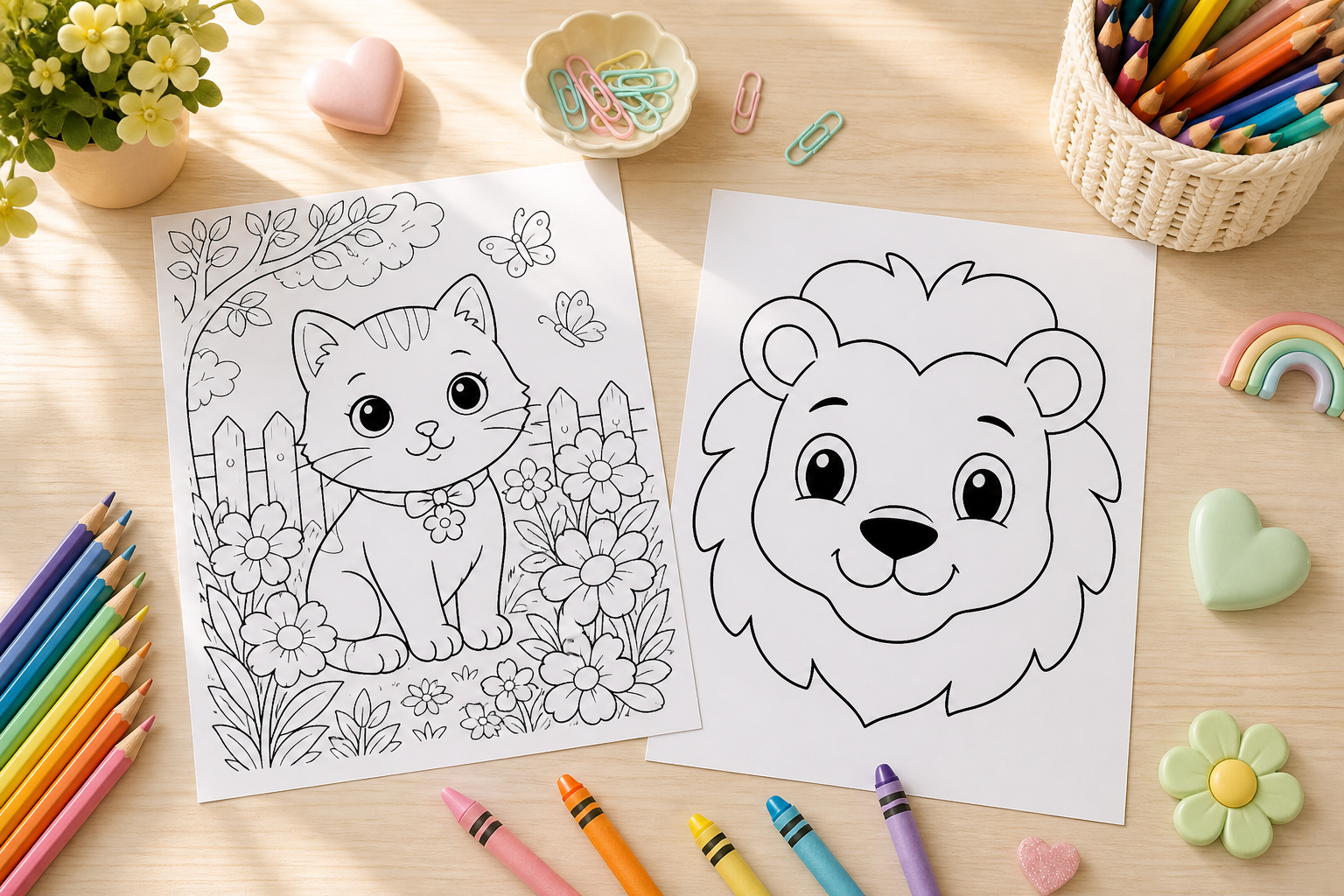
A beautiful preview does not automatically guarantee a good print. Look for sharp black lines, a white background, and enough resolution for Letter or A4 paper. The packs sold here are high-resolution PNG files, which makes it easy to open one sheet, check it, and print just that page; a PDF is more convenient when you want to send an ordered set of pages to the printer at once. Either way, the source artwork has to be clear.
Avoid enlarging a tiny image found in a search result. The printer cannot restore detail that is missing from the original, so the lines may look fuzzy or blocky. Use the actual download supplied by the artist or publisher. Before printing a full bundle, test one page. Check the ears, flower petals, facial features, and other narrow lines. They should remain solid and easy to see without turning heavy or muddy.
Paper choices: use what suits the tools
Ordinary 20 lb copy paper is perfectly adequate for crayons and most colored pencils. It is inexpensive, easy to find, and useful when children color several pages in one sitting. For a smoother pencil result or a finished picture that will go on the wall, step up to 24 or 28 lb bright-white paper. The extra weight feels more substantial and is less likely to wrinkle.
Markers need a little more care. Light cardstock or 32 lb paper reduces bleed-through, although every marker and printer behaves differently. Place scrap paper under the sheet to protect the table. If children want to use watercolor pencils, print with a laser printer when possible and test first; some inkjet lines may soften when wet. Always confirm that heavier paper is within your printer’s supported weight.
Printer settings for coloring pages printable at home
Open the print preview instead of sending the file straight to the printer. Select the correct paper size—US Letter or A4—and use “fit to printable area” if the artwork touches the edge. If the file was designed with a comfortable margin, printing at 100% or “actual size” usually gives the sharpest result. The preview should show the complete border with no missing paws, petals, or corners.
Choose black-and-white or grayscale mode for outline art. Normal quality is sufficient for most pages and uses less ink than a photo setting. Turn off borderless printing unless the instructions specifically recommend it; borderless mode can enlarge and crop the artwork. If lines appear too pale, move from draft to normal quality before trying the highest setting. You will often get a clean page without wasting extra ink.
- 1. Download and unzip the files if needed.
- 2. Open one of the PNG sheets in a trusted image viewer or your browser.
- 3. Select Letter or A4 to match the paper in the tray.
- 4. Choose grayscale, normal quality, and actual size or fit.
- 5. Inspect the preview, then print one test sheet.
Turn a printed sheet into a richer activity
Coloring does not need to end when the last space is filled. Ask a child to name the character, describe what happened before the scene, or draw what sits beyond the printed border. Younger children can hunt for circles, triangles, or a chosen color. Older children can experiment with warm and cool palettes, light direction, or patterns such as dots, checks, and stripes.
Finished pages can become more than refrigerator art. Fold a picture into a greeting card, use a colored character as a notebook cover, or cut out simple shapes for a supervised collage. A class can color the same garden in four seasons and compare the palettes. Families can bind selected pages into a personal book, adding a date and a one-sentence story to each picture. These small extensions make the activity feel personal without requiring expensive supplies.
Build a small, useful coloring library
You do not need hundreds of loose sheets on day one. Start with a balanced folder: a few easy animal faces, several scene pages, one educational activity, and a detailed design for longer sessions. Store digital files in clearly named folders such as “easy,” “animals,” “school,” and “detailed.” Keep the original zip file as a backup, and print from the extracted copy so it is easy to preview each design.
Respect the license that comes with every download. Personal-use permission normally covers printing for your own household, but it does not automatically allow resale or online redistribution. Classroom products may include broader permission for one teacher or school year. Clear licensing supports the people who create the artwork and keeps high-quality printable resources available.
Find your next printable set
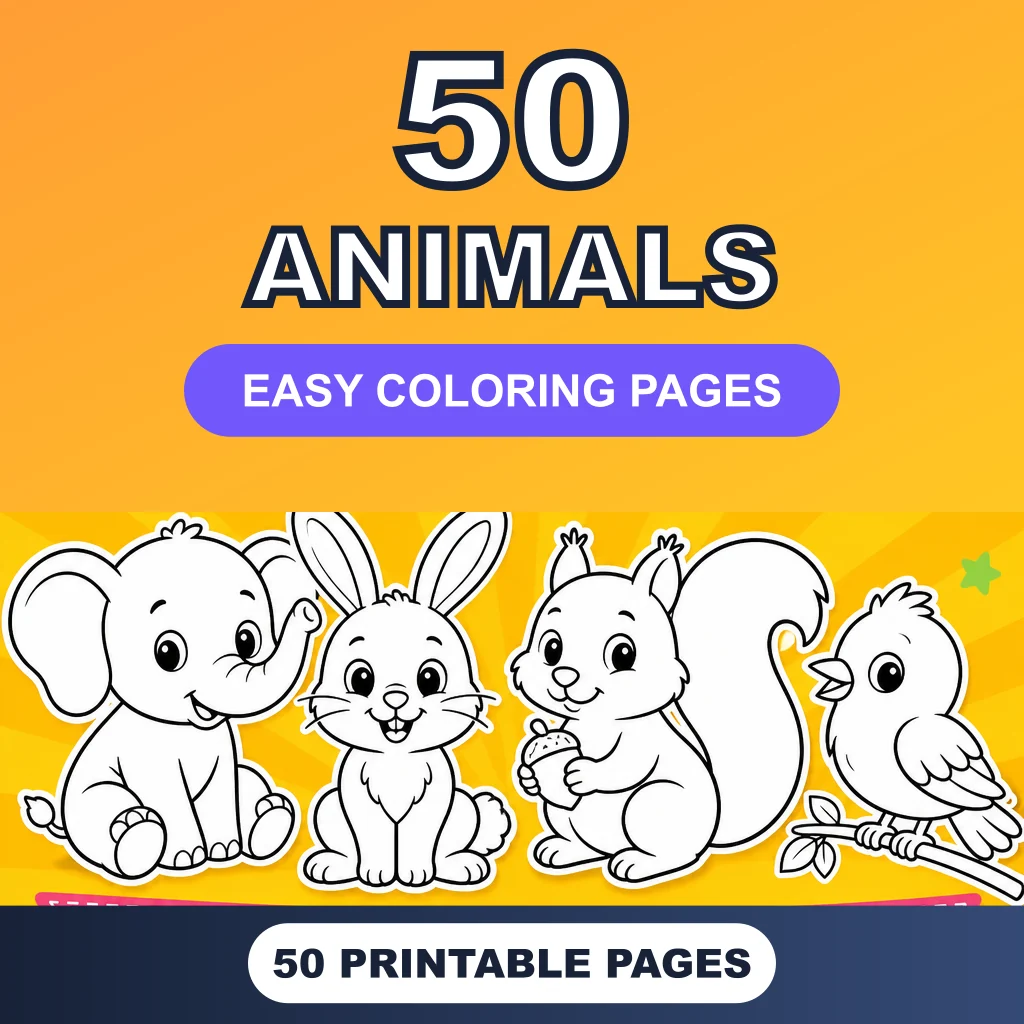
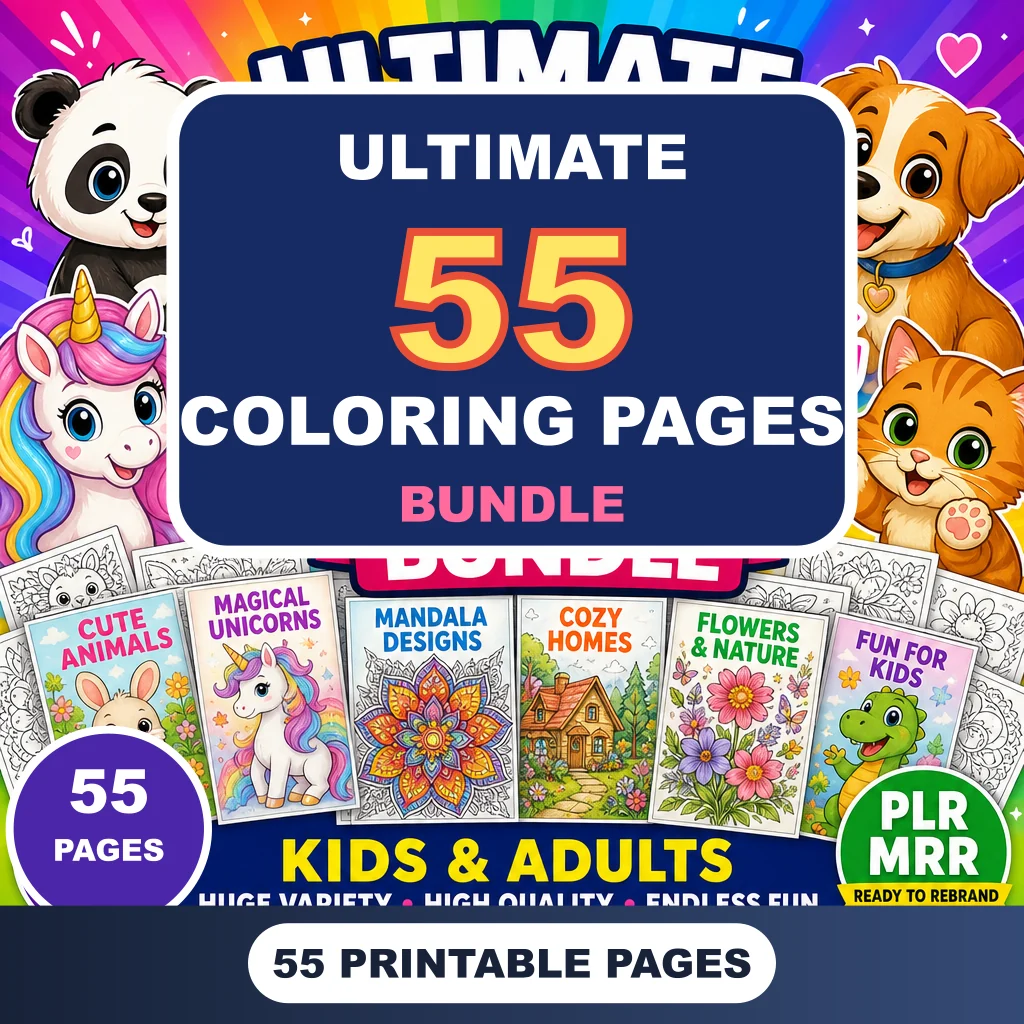
The right printable is the one that fits today’s child, supplies, and available time. For quick wins, explore our easy animal coloring pages. For a wider mix of themes and ages, browse theUltimate Mega Coloring Pages Bundle. Families with younger artists can also read ourcute cat coloring ideasor compare every instant download in the Coloring Pagees shop. In October, the same printing questions come up for seasonal art, so we wrote ahalloween coloring pagesguide and a friendlier companion piece oncute halloween coloring pages printable.
Frequently asked questions
What paper is best for printable coloring pages?
Regular 20 lb paper works well for crayons. Choose 24–32 lb paper or light cardstock for markers, watercolor pencils, cards, and artwork you plan to display.
Should I print coloring pages from a PDF or a PNG?
PNG is convenient for choosing one image at a time, which is how our downloads are supplied; a PDF is convenient when you want to print an ordered set in one go. Both print well when the artwork is high resolution and you select the correct paper size.
How can I save ink?
Print in grayscale at normal quality, avoid photo and borderless modes, preview before printing, and print only the sheets you plan to use.